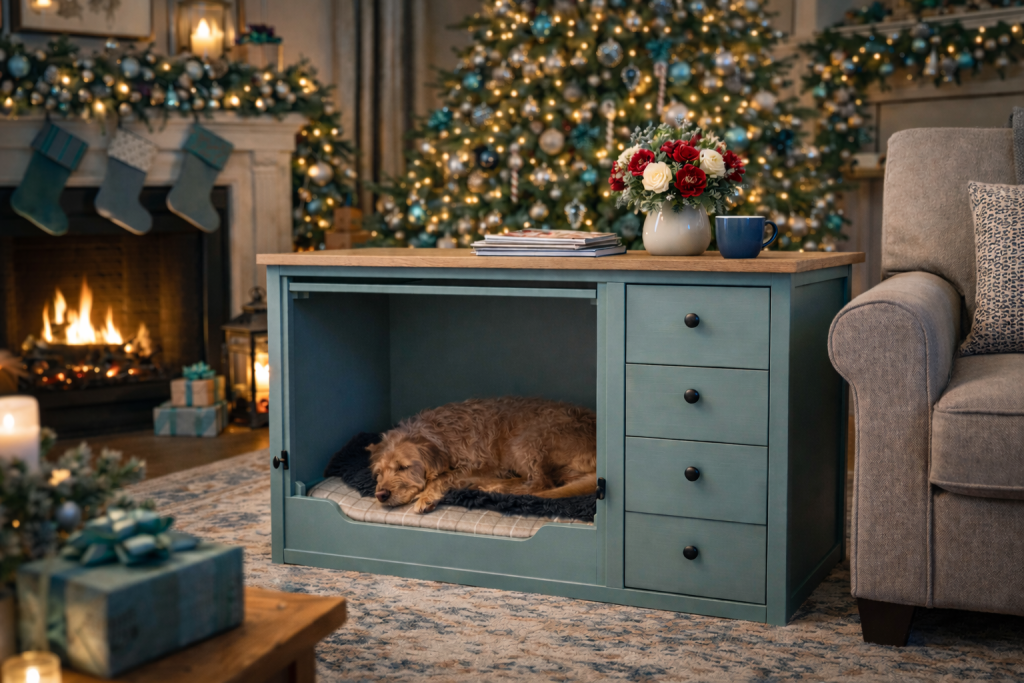
When we talk about gifts for our dogs, we often think of toys, treats or new beds. But one of the most valuable presents you can give your dog does not come wrapped in paper. It comes through confidence, consistency and calm.
That confidence is built in many ways. Through play, walking together, enrichment games and allowing dogs to use their natural instincts. Activities that encourage dogs to sniff, problem solve and explore their environment support both mental wellbeing and emotional balance. Scent games in particular can be incredibly powerful, offering calm mental stimulation that helps dogs settle. If you are new to scent work, this beginner guide from the Sniffer Shop is a great place to start.
At The Pet Carpenter, Gift Crate Confidence is about helping dogs of all ages feel calm and secure by giving them a safe, familiar crate space they choose to use.
What Do We Mean by Gift Crate Confidence?
Gift Crate Confidence is not about shutting dogs away or forcing them into confinement. It is about helping dogs feel comfortable with a space that offers safety, familiarity and rest.
When introduced correctly, a crate becomes a bedroom your dog can rely on. A place they choose to retreat to when they are tired, overwhelmed or simply in need of calm. This confidence supports dogs through many life stages and situations, helping them cope with change in a way that feels safe.
It Is Never Too Late to Introduce Crate Training
A common misconception around crate training is that it is only suitable for puppies. In reality, dogs of any age can learn to feel comfortable with a crate.
Adult dogs, senior dogs and rescue dogs can all benefit from being gently introduced to a crate space. The key is patience and allowing your dog to move at their own pace. Older dogs may need more time and reassurance, but crate confidence can be built at any stage of life.
For rescue dogs, using a slower and more thoughtful approach is especially important. Allowing them to explore the crate without pressure and building positive associations gradually can make a big difference.
Patience, Play and Positive Associations Matter
Crate training should never feel rushed. It is not a task to complete, but a relationship to build.
Using games, enrichment, scatter feeding and calm praise helps dogs associate the crate with positive experiences. Short, regular interactions are far more effective than long sessions. Leaving the door open and allowing your dog to move in and out freely helps build trust.
If you are starting with a puppy, crate training can also support routine building, toilet training and quality rest. Our guide to the do’s and don’ts of puppy crate training is a helpful place to begin.
Let Your Dog Set the Pace
One of the most effective things you can do when introducing a crate is to keep the process low key. Dogs are highly attuned to our emotions, and if we make a big deal of things, they can feel unsure.
Place the crate in a calm area of your home where your dog already enjoys resting. Add familiar bedding that smells like home. Some dogs will walk straight in, others may take days or weeks to build confidence. Both responses are completely normal.
A Crate Should Never Be Used as Punishment
A crate should always feel like a safe and positive space. It should never be used as punishment or a place of isolation.
Using a crate in this way can damage trust and create negative associations that are difficult to undo. Instead, the crate should represent calm, rest and security, especially in busy households or during times of change.
The Real Life Benefits of Crate Confidence
Crate training is not about convenience for owners. It is about preparing dogs for real life situations they are likely to experience.
Crate confidence can support dogs by:
- Helping with toilet training and routine building in puppies
- Encouraging adequate rest, particularly for working or high energy breeds
- Making vet visits and overnight stays less stressful
- Supporting calm travel and holidays
- Providing safe rest during recovery from injury or surgery
- Offering a retreat in busy or noisy households
Crate confidence can also play a role in supporting dogs who struggle with separation related behaviours. You can read more about this here.
Why January Is the Perfect Time to Build Crate Confidence
January is National Train Your Dog Month, making it an ideal time to start, or restart, crate training in a positive and considered way. After the busyness of the festive season, many dogs benefit from calmer routines, clearer structure and intentional rest.
For dogs who are already crate confident, this can also be a great opportunity to refresh how the crate space is used. Adding gentle enrichment such as scatter feeding, calm chew time or simple scent games placed around or inside the crate can help reinforce it as a positive, restful environment rather than just somewhere to sleep.
Unsure Where to Start With Crate Training?
Crate training should never feel overwhelming, and you do not have to navigate it alone.
Our dog training hub brings together supportive guidance and practical resources developed alongside The Dog Trainer School. Whether you are introducing a crate for the first time, supporting a rescue dog, or refining an existing routine, this is a great place to begin:
https://www.thepetcarpenter.co.uk/dog-training/
You may also find our step by step introduction guide helpful:
https://www.thepetcarpenter.co.uk/introduce-your-dog-to-their-new-crate/
What If the Look of a Crate Has Put You Off?
If you have been put off crate training because of the look of a traditional metal crate, you are not alone.
We always encourage initial training to take place in a standard metal crate so your dog can build confidence and familiarity first. This ensures training is led by your dog’s needs, not aesthetics. While your bespoke pet furniture is being crafted, we can also support this stage by providing a crate if needed.
Once your dog has built crate confidence, you can design a practical, functional and beautiful piece of dog crate furniture with us, or as we like to call them, your dog’s bedroom.
A space designed for your dog, and for your home.
Gift Crate Confidence Lasts a Lifetime
Toys wear out. Treats get eaten. But confidence stays with your dog for life.
By investing time, patience and understanding into crate training, you are giving your dog a skill they can rely on in many situations. That is why we believe Gift Crate Confidence is one of the most meaningful presents you can give your dog.
It is not about the crate itself. It is about how your dog feels inside it.
FAQs: Gift Crate Confidence and Crate Training
Yes. Dogs of any age can learn to feel comfortable with a crate when introduced positively and at their own pace.
There is no set timeline. Some dogs settle quickly, others need weeks or longer. Progress should always be led by the dog.
No. Start with the door open and allow your dog to move freely in and out until they are relaxed.
When done correctly, crate training is not cruel. Dogs naturally seek out den like spaces when they feel safe.
A well introduced crate can support some dogs by offering a predictable, safe space, particularly when paired with calm routines and enrichment.