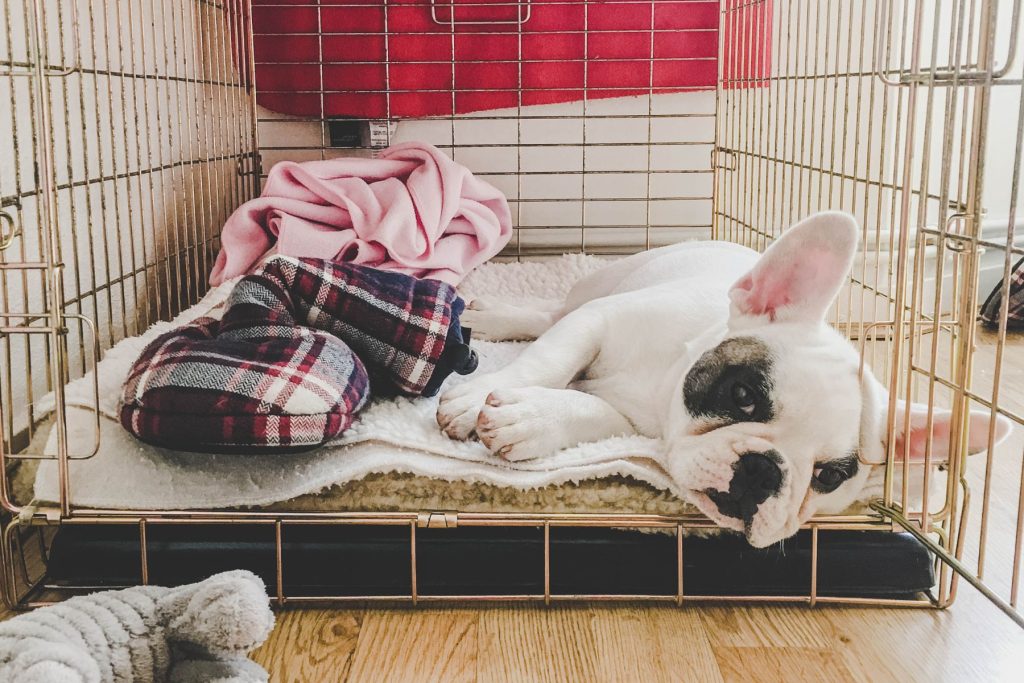
Understanding Separation Anxiety in Dogs
Separation anxiety is one of the most common behavioural challenges faced by dog owners. It happens when a dog becomes anxious or distressed when left alone or separated from their owner.
Typical signs of separation anxiety in dogs include:
- Whining, barking or howling when left alone
- Destructive behaviours like chewing or scratching
- Attempts to escape or follow you
- Pacing, panting or drooling
These behaviours often stem from fear, uncertainty or over-attachment. Sometimes, it can develop after a big change such as moving house, rehoming, or changes to your daily routine.
According to the Generation Pup Longitudinal Study, early-life experiences play a significant role in whether dogs develop separation-related behaviours (SRBs). Puppies who experience consistent routines and have a designated safe space, like a crate, are less likely to display anxiety when left alone.
Can a Dog Crate Help with Separation Anxiety?

When introduced positively and trained at your dog’s pace, a dog crate can play a valuable role in supporting dogs who struggle with being left alone. A crate provides a safe, den-like environment where your dog can rest and feel secure, helping them develop confidence and calmness.
However, it is important to remember that a crate alone won’t “fix” separation anxiety. Every dog is different, and if your dog is already anxious about being confined or left, it’s essential to work with a qualified dog trainer or behaviour professional.
A crate should never be used as a form of punishment. The goal is to build positive associations with the space, so your dog chooses to spend time there voluntarily.
Building Positive Associations with a Crate
If your dog hasn’t been crate trained before, or has had a negative experience, patience and consistency are key.
Here are a few gentle ways to begin crate training for separation anxiety:
- Keep the crate open and accessible at all times.
- Add familiar bedding, scents and favourite toys.
- Reward calm behaviour near or inside the crate.
- Start with short sessions and keep the door open.
- Never rush or close the crate too early.
When introduced gradually, a crate can become a dog’s safe space an be a spot to relax when tired, frightened, or needing time out.
Our client Grania Benson, a veterinary surgeon, describes her Labrador Beau’s crate as his safe haven:
“If he’s unsure with noises like fireworks or tradesmen in the house, he goes straight to his crate. It’s his place of calm and comfort.”
When to Seek Expert Help
If your dog is showing signs of stress when left alone, it’s important to seek professional support. A qualified dog trainer or behaviourist can help identify the cause of anxiety and develop a tailored plan.
You can find trusted professionals and additional resources in our Dog Training Resources section and through The Dog Trainer School.
They can help you understand the root cause of your dog’s anxiety and guide you through a gentle, structured training approach.
Other Ways to Support a Dog with Separation Anxiety
In addition to crate training, there are other ways to help ease anxiety:
- Maintain predictable routines to help your dog feel secure.
- Offer regular mental enrichment through puzzles or sniffing games.
- Provide enough exercise for both body and mind.
- Try calming aids such as herbal remedies or pheromone diffusers.
- Avoid leaving your dog alone for long stretches.
Every dog is unique, and it often takes time to find the right combination of strategies and that’s why it can be beneficial to work alongside a professional.
Why a Safe Space Matters
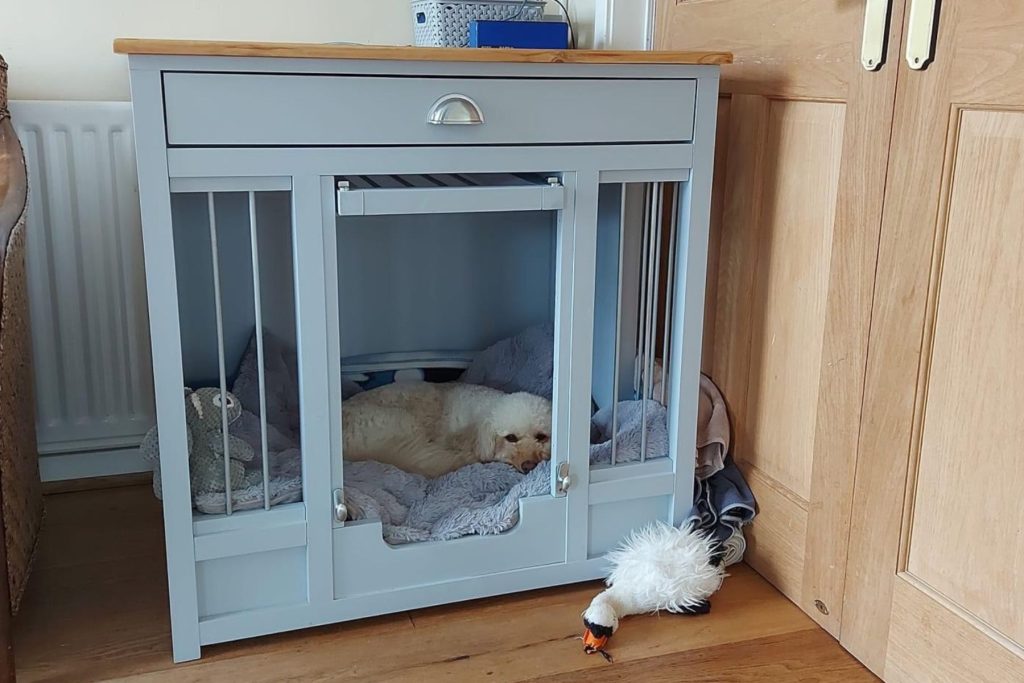
Dogs naturally seek out enclosed, quiet spaces to rest and regulate their emotions. Providing a comfortable, familiar crate can help your dog feel safe during times of stress, whether it’s fireworks, vet visits, travel, or recovery after illness.
Our customer Lynda Britchford shared how her anxious rescue, Poppy, found confidence through her bespoke furniture:
“Poppy was terrified of rattley metal crates, but our Pet Carpenter piece became her hidey hole. Within an hour she went in on her own and has since settled and uses it daily, it’s everything we hoped for.”
This reflects our belief that crate comfort, when introduced with care, can be life-changing for dogs who need a sense of security.
In Summary
A crate can be a helpful tool for managing dog crate separation anxiety, but it’s not a quick fix. Success depends on patient training, positive reinforcement and professional guidance.
When used correctly, a crate can become a place of calm and comfort, a safe space that can support your dog across many situations in life.
If your dog already enjoys the security of a crate, a bespoke crate design can transform that practical tool into a beautiful piece of furniture that blends seamlessly into your home.
FAQs About Dog Crate Separation Anxiety
It’s when a dog feels anxious or distressed when left alone, often showing behaviours like barking, chewing or pacing.
Yes, when introduced gently and positively. A crate provides a safe, secure environment that can help reduce stress.
No. Crates should be used for rest and comfort, not extended confinement.
You can reintroduce a crate slowly, using patience and positive reinforcement. Consider a soft, homely design to make it feel less like confinement.
If your dog’s anxiety causes significant distress or destruction, consult a qualified behaviourist or trainer.
If you’re struggling with your dog’s anxiety, visit
👉 The Dog Trainer School for expert guidance.
And if your dog already finds comfort in their crate, explore our bespoke pet furniture range at 👉 The Pet Carpenter to create a beautiful, calming space that feels like home.